Pharrell is adding actor to his diverse resume, which includes producing and performing music and modeling, according to Sister 2 Sister. He stars in a short film directed by Yi Zhou, based on a short story by Russian writer Nikolai Gogol.
The film was inspired by "The Nose." In that work, a government officer finds that his nose has left his face and is living an independent life.
--Whitney Teal
Thursday, October 8, 2009

Recognize! Herta Müller Scores Nobel Prize for Literature
 Here's another chick to add to your Girl Power! list. Herta Müller, a German poet and essayist, was recognized by The Swedish Academy for "the concentration of poetry and the frankness of prose, depicts the landscape of the dispossessed," reports the Associated Press. The Nobel Prize Laureate frequently writes about her experiences under the oppressing Romanian government, where she was raised.
Prior to today's announcement, Joyce Carol Oats and Philip Roth, both well-known American novelists, were thought to be the favorites for the Nobel Prize in Literature, along with Israeli writer Amos Oz. The last American to win the $1.4 million award was Toni Morrison in 1993.
Müller will receive her prize at a ceremony in Stockholm on December 10.
--Whitney Teal
Tuesday, October 6, 2009
The Chick Lit Chick: Meet Chick Lit's Frenemy
 "Bored of chick lit? Why not check out bitch lit, a new genre featuring female anti-heroes who are mad, bad and dangerous to know." -- The Guardian
Lately publishers and reviewers have been throwing out the term Bitch Lit. I recently finished reading Erica Kennedy’s Feminista, which has earned this label. Mary Sharratt, who co edited the short story collection Bitch Lit, describes the genre as “a smart and subversive celebration of female anti-heroes — women who take the law into their own hands, who defy society's expectations, who put their own needs first.”
Feminista's heroine, Sydney Zamora, definitely fits that description. Sydney's brazenly unapologetic for getting what she wants, making her the poster child for this new type of lit. Sydney isn’t out and about with the hopes of landing Mr. Right; She wants Mr. Right, right now -- and she's willing to get him by any means necessary. But it’s not just her take-charge attitude that distinguishes her from the archetypal leads in most Chick Lit novels.
"One of my goals was to write something unabashedly Chick Lit, but give it more edge to show that could be done," Kennedy told us, via her blog The Feminista Files. "I think the reason we get so annoyed when Chick Lit/flicks are just fluff is because we all basically go through the same girl shit. So I think we want these books to tell our story which is why we're so annoyed with them when they don't."
And while Kennedy purposefully "hit all the chick lit cliches," she did them in a different way. Though she has a pretty cushy magazine job, Sydney isn’t one to just throw money around recklessly. She grapples with spending $300 on a new pair of shoes, when most characters in her position would have bought them in a heartbeat.
Check out this excerpt from the book:
She was furious at him, at herself, at the world, really, but Quo was no place to make a scene. It was the überhip restaurant of the moment, the kind of New York it spot that had an unlisted phone number and a menu people called "creative." All the senior editors at Cachet had been raving that the Thai fusion fare was a-maaaaaaaaaazing, hype Sydney was disinclined to believe. It was never about the food at these places. It was about being seen.And that was exactly what she didn’t want now. Beating a hasty retreat through the dimly lit, ridiculously pretentious subterranean dining room, Sydney flipped up the collar of her trench and donned her plaid newsboy cap, tugging the brim down low. With her healthy five-foot-nine-inch frame, bronzed skin, and chocolate waves of hair falling just past her shoulders, she stood out like a penny in the snow at these trendy hangouts where most of the women were white, blond, and thinner than Darfur refugees. Her honey-brown eyes flicked about the room, on the lookout for Omnimedia employees. The last thing she needed was for this to get back to the office. Those catty bitches (male and female) gossiped about her enough.
Sub-genre Soup
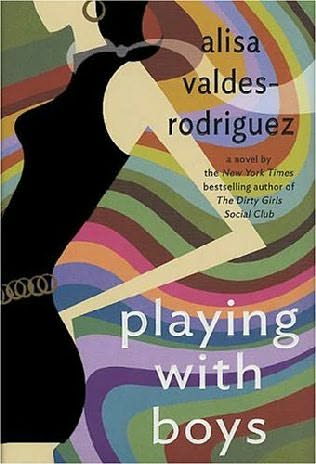
While Bitch Lit may be relatively new to Stateside readers, it's not exactly news to British readers. Bitch Lit was published in 2006 in the UK. A reviewer on Amazon.com described the book as, "a collection of bright, darkly funny women."
And while the verdict is still out on whether Chick Lit in general actually empowers young women (one blogger recently called the genre's books a "repetitive story line that was neither empowering or encouraging"), any author who can switch up the usual formula and add a little sass and flair gets a vote from me.
--Ashleigh Menzies
Ashleigh is a bonafide chick lit addict (with the pink collection to show for it), and will be bringing you the best of the genre every other week.
Around the Web: Judy Blume + Aunt Flow
 We’ve all been there: a flight across the country, a million things we could be catching up on, and we’re reading SkyMall. But maybe there’s something to be said for those cheesy in-flight magazine. [via Jezebel]
For those of us who are still smarting about missing Judy Blume at the National Book Festival, Double X brings us an interview with the controversial Young Adult fiction writer herself. [via Double X]
Want to look cute this season without poring through ad-clogged fashion mags? Clutch makes it easy with a report on Fall Fashion for Dummies. [via Clutch]
We have Women’s Studies, African American Studies, and Queer Studies. Introducing the next step in the socially conscious college majors evolution: Gat Studies. [via Bust]
In high school, “come over and watch a movie” was code for “come over and make out.” If you’ve outgrown this, take a cue from Nerve’s list of 15 Movies to Guarantee You Sleep Alone. [via Nerve]
Do we need a “menstrual activism” movement to de-stigmatize the period, or is that just bloody ridiculous? (Fun fact: a woman uses an average of 11,400 tampons in her lifetime!) [via Salon]
--Allison Geller
Monday, October 5, 2009
Oh Snap!: Instant Reading Room
 Amid the hustle and bustle of Bethesda, Md.'s Montgomery Mall, this gentleman finds momentary solitude with Harper Lee's To Kill A Mockingbird.
--Nicole Crowder
Photo courtesy Whitney Teal
Saturday, October 3, 2009
Recognize! UL visits the D.C Book Festival
Last weekend, UL had the chance to join other giddy bibliophiles at the annual D.C Book Festival held on the National Mall. We scoped the festival grounds looking for cool readers like yourselves to find out what books they are currently reading and which authors they came to see:
 Meet American University student Lauren, who we initially spotted for her adorable red-framed glasses.
"I wanted to meet Junot Diaz who wrote The Brief, Wondrous Life of Oscar Wao. He signed my book, and that was really nice. He was the primary author, but I’d really like to see John Irving and probably Lois Larby, if that’s possible."
"The last book I read... I’m reading a couple of books at school right now. I’m reading a book by Gabriel Garcia Marquez called Love in the Time of Cholera.

Next up are two friends M (left) +A who we spotted while checking out an author reading.
UL: Is there a particular author you came to see?
M: Not really, but there is this woman here named Sharon Robinson. When I was younger we went to see her at the National Book Fair, but I didn’t get to talk to her.
UL: What book are you both currently reading?
A: Right now I’m reading Dude, Where’s My Country? by Michael Moore.
M: My favorite book would probably be First Part Last by Angela Johnson. But right now I’m reading Gravity by Leanne Lieberman. It’s about an Orthodox teenage-Jewish girl, but then I guess she starts questioning her sexuality.
 And before the rain ushered everyone under tents we bumped into mother-daughter duo Linda (left) and Jasmine.
Jasmine: I had my book signed by Jodi Picoult.
Linda: I'm hoping to catch Walter Moseley at four o'clock. I'm currently reading The Seven Pillars of Wisdom by T.E Lawrence (also known as Laurence of Arabia).
Jasmine: I'm reading Julie & Julia.
We hope those of you in D.C area were able to check out all the goings on of the Festival last week. And meet us back here for more coverage of future book festivals and events!
Friday, October 2, 2009
SheReads: Miss Melissa, Do-Gooder-in-Training
 SheReads looks at the reading lists of cool chicks. If you want to be featured, send an email to uptown.literati@gmail.com.
The Ditchdigger's Daughters by Yvonne S. Thornton: "I heard this one on tape (yes, as in cassette) many moons ago, then it was made into a movie. As usual, I still love the book and it really makes me want to write a book about my family too. Synopsis: Man, a ditch digger in fact, has family of six daughters who all grow to be professionals including two doctors and a lawyer."
Big Girls Don't Cry by Connie Briscoe: "One of those books I can just keep re-reading. In this book, we watch Naomi mature and find her best personal and professional life. I felt like I was right there living, loving, being lost, being found. This is a great story you may not be able to put it down either!"
Veronika Decides to Die by Paolo Cuelho: "Just that. She decides to die and attempts suicided but suddenly she wants to live more than ever. Really makes you appreciate life."
--Whitney Teal
Veronika Decides to Die by Paolo Cuelho: "Just that. She decides to die and attempts suicided but suddenly she wants to live more than ever. Really makes you appreciate life."
Must Reads ("I hope to get to these before the year 2011, if life every slows down!")


- The Alchemist by Paolo Cuelho: "The first book my boyfriend read and enjoyed. Ever. I want to see what it's about one of these days."
- 48 Laws of Power by Robert Greene and Joost Elffers: "I want to be powerful, what can I say?"
- Invisible Man by Ralph Ellison: "A classic. I've started and hope to finish."
- Seen it All and Done the Rest by Pearl Cleage: "I LOVE Pearl Cleage. Ever since I read What Looks like Crazy on an Ordinary Day we've been together. This is her only one I have yet to read. Yippee!"
--Whitney Teal
Front of Book: Sweet September
 It’s September: the time to follow your fourth grade teacher’s suggestion to fall into a good book. Things are not so elementary, however, in this month’s magazines’ reading suggestions.
 At Vogue, Anna Wintour’s underlings are raving about the “astonishing first novel” of a bright young talent, Evie Wyld, titled After the Fire, a Small Still Voice. The story chronicles a disturbed family history, set in Australia in 1965 and today. Wyld’s gift for language and empathy for her characters makes this outback drama a good bet. Vogue also endorses Nick Hornby’s latest, Juliet, Naked. Sucker that I am for anything Hornby, this novel should be no less of a delight than, for instance, High Fidelity, whose themes of rock music and its obsessive fans are repeated in the new novel. The protagonist is a typical Hornby hero—boy in a man’s body—but the complex female character Annie asks the intriguing questions.
Over in Oprah’s ever-increasing territory is a myriad of reading suggestions. The most intriguing include Nicholson Baker’s The Anthologist, a novel about a hapless poet who just can’t find the words. The book is interspersed with wry lessons on poetry, while making insights on the paradoxes of the artistic career. Things continue on the artsy vein with Dancing in the Dark, by Morris Dickinson. While I’m biased towards anything with “dancing” in the title, the subject of this cultural history is actually the Great Depression and the art that got America through it. From the highbrow to the entertainment of the masses, the book gives an intriguing look at an era that may not be so distant. On a graver note is Strength in what Remains by Tracy Kidder, a “ young genocide survivor’s tale of escape, healing—and hope.” The book follows Deogratias, who fled Burundi for New York in 1994, from sleeping in Central Park to attending medical school, without ever turning away from the place of his birth, despite the dark stain of genocide.
This month O takes us through the bookshelf of Jennifer Garner, who says she grew up reading and believes strongly in the importance of education, which got her mother out of poverty. Books that made particular difference to Garner include Crimes of the Heart, the first play she related to, and Possession, by A.S. Byatt, which she read while struggling to find employment as an actor. A history buff, Garner also loves John Adams, as well as the Barefoot Contessa Cookbook, which she reads like a novel. If Jennifer Garner does it, it must be OK.
 Elle recommends Joyce Carol Oates’ newest, Little Bird of Heaven. “Vintage Oates”, the novel is fraught with violence, ambition, sex-crazed teens, and family troubles. I’m especially intrigued by the first English translation of the trilogy Love, Anger, Madness by Marie Vieux-Chaquet. Suppressed in 1968 for exposing Haiti’s sexual, racial, and social tensions, the book evokes the terrors of life under regime in an intensely emotional way. Elle and O both recommend Homer and Langley by E.L. Doctorow, a work of fiction about legendary characters: the Collyer brothers, two New York hermits found dead in their apartment in 1947. Doctorow imagines the minds and lives of these two eccentrics from folklore, to compelling results.
This month’s women's mags agree on one thing: Foodie Frank Bruni’s memoir Born Round is a must-read. Just what you need to store up for the winter.
--Allison Geller
Thursday, October 1, 2009
Hedes + Dekes: E. Lynn Harris Left 7 Unpublished Manuscripts
 The latest in the death of prolific novelist E. Lynn Harris' sudden death comes from Essence.com:
Seven unpublished manuscripts written by the late groundbreaking author E. Lynn Harris have been recovered from his computer's
Thanks to Erica Kennedy for forwarding the link via Twitter.
--Whitney Teal
The Teacher's Lounge: Dr. H. George Hahn
 The Teacher's Lounge eavesdrops on professors from various disciplines at universities across the country to find out what they're reading when they're not assigning you 12-page dissertations...due in two weeks.
Dr. George Hahn is a scholar of 18th British Literature and author of several published essays and a book titled The Ocean Bards: British Poetry and the War at Sea, 1793-1815 (2008). Dr. Hahn teaches British Literature at Towson University in Towson, Maryland.
UL: What is the name of the course you teach?
Dr. Hahn: Among other courses, I teach the undergraduate Beowulf to Virginia Woolf 6-credit survey, the course in 18th-century English literature, and a graduate seminar in 18th-century satire
-“Never take part in the nonsense that is talked about by the ignorant and uninstructed.”--Marcus Aurelius
-“True ease in writing comes from art, not chance,
As those move easiest who have learned to dance.”—Alexander Pope
-“The slovenliness of our language makes it easier for us to have foolish thoughts.”—George Orwell
UL: Are there any authors, either living who dead, you hope everyone would explore or know more about?
Dr. Hahn: Authors that I name—Charles Dibdin, Henry James Pye, Tom Carter, to name a few—are lost in time. I call them the Ocean Bards, and my latest book, published in 2008, The Ocean Bards: British Poetry and the War at Sea, 1793-1815 would be my own general answer to your question. Long before Patrick O’Brian’s novels of the great age of combat sail, a vast popular poetry abounded about that 22-year war with France when England stood alone, and war was an existential fact and not escapist fiction. Yet none of thousands of these poems, printed in newspapers and magazines and hawked as broadsides and sung in streets and on shipboards ever gets into the anthologies.
So whatever the attitudes of literary critics now, to neglect these poems is to miss an appreciation of the literary landscape then. Certainly the tall oaks of Wordsworth et al. dominate the picture, but to erase from it the thick underbrush of popular war poetry below, the war clouds above and the sea beyond is to present a false picture of literary and social history.
So the book encourages the reconstruction of that time in chapters about poems of the navy, the nation and the Ocean Bards; invasion poems; sea battle ballads; victory odes; seascapes, and sailors’ elegies.
UL: What are your incentives for reading books? For inspiration? For catharsis? For relaxation? For knowledge?
Dr. Hahn: I see older literature, history, biography, and philosophy as French doors to walk back through to listen to those professors in absentia, wise men and women long dead, who wrote those books. To me, that’s the magic of great writing. But don’t we now know much more than they did? T. S. Eliot had the answer: “Precisely, and they are that which we know.”
--Nicole Crowder
Dr. Hahn: Among other courses, I teach the undergraduate Beowulf to Virginia Woolf 6-credit survey, the course in 18th-century English literature, and a graduate seminar in 18th-century satire
UL: What five books would you absolutely recommend your students or peers read?
Dr. Hahn: How about seven? Severely constricting an answer to my spec ialization in 18th-century England, I would name these: Addison and Steele’s Spectator papers, Swift’s Gulliver’s Travels, Pope’s Essay on Criticism, Fielding’s Tom Jones, Boswell’s Life of Samuel Johnson, and Burke’s Reflections on the Revolution in France along with Paine’s Rights of Man. Why these?
Dr. Hahn: How about seven? Severely constricting an answer to my spec
 ialization in 18th-century England, I would name these: Addison and Steele’s Spectator papers, Swift’s Gulliver’s Travels, Pope’s Essay on Criticism, Fielding’s Tom Jones, Boswell’s Life of Samuel Johnson, and Burke’s Reflections on the Revolution in France along with Paine’s Rights of Man. Why these?
 Put into a time capsule, together they preserve the century’s interests and style. In them we hear how Englishmen talked and argued about questions still at issue, we sample the quality and value of their wit, we return to the Golden Age of satire and the birth of the novel, we see the change from reason to emotion in the way they thought and talked over the century, we see and hear and smell both the mean streets of London and the sunny countryside of that small but important island nation.
Knowing these books is to know part of our cultural genetics as Americans. Whatever our race, ethnicity, or religion, it is certain that our language and grammar, our political and legal structures, and the basis of our laws and social customs are rooted in 18th-century England.
Knowing these books is to know part of our cultural genetics as Americans. Whatever our race, ethnicity, or religion, it is certain that our language and grammar, our political and legal structures, and the basis of our laws and social customs are rooted in 18th-century England.
UL: Do you have a favorite quote from a book or author that you often refer to?
Dr. Hahn: I can’t decide. Take your pick of one of these:
Dr. Hahn: I can’t decide. Take your pick of one of these:
-“Never take part in the nonsense that is talked about by the ignorant and uninstructed.”--Marcus Aurelius
-“True ease in writing comes from art, not chance,
As those move easiest who have learned to dance.”—Alexander Pope
-“The slovenliness of our language makes it easier for us to have foolish thoughts.”—George Orwell
UL: Are there any authors, either living who dead, you hope everyone would explore or know more about?
Dr. Hahn: Authors that I name—Charles Dibdin, Henry James Pye, Tom Carter, to name a few—are lost in time. I call them the Ocean Bards, and my latest book, published in 2008, The Ocean Bards: British Poetry and the War at Sea, 1793-1815 would be my own general answer to your question. Long before Patrick O’Brian’s novels of the great age of combat sail, a vast popular poetry abounded about that 22-year war with France when England stood alone, and war was an existential fact and not escapist fiction. Yet none of thousands of these poems, printed in newspapers and magazines and hawked as broadsides and sung in streets and on shipboards ever gets into the anthologies.
So whatever the attitudes of literary critics now, to neglect these poems is to miss an appreciation of the literary landscape then. Certainly the tall oaks of Wordsworth et al. dominate the picture, but to erase from it the thick underbrush of popular war poetry below, the war clouds above and the sea beyond is to present a false picture of literary and social history.
So the book encourages the reconstruction of that time in chapters about poems of the navy, the nation and the Ocean Bards; invasion poems; sea battle ballads; victory odes; seascapes, and sailors’ elegies.
UL: What are your incentives for reading books? For inspiration? For catharsis? For relaxation? For knowledge?
Dr. Hahn: I see older literature, history, biography, and philosophy as French doors to walk back through to listen to those professors in absentia, wise men and women long dead, who wrote those books. To me, that’s the magic of great writing. But don’t we now know much more than they did? T. S. Eliot had the answer: “Precisely, and they are that which we know.”
--Nicole Crowder
Subscribe to:
Posts (Atom)

